Community
Educational
Del Mar Students Look to the Mangroves to Soften San Diego's Hard Water
🌟 UPDATE: We made the Del Mar Times! Read the full story: Local students create nature-inspired water filter for international biomimicry contest.
San Diego is notorious for its chalky hard water, but is it unhealthy to drink?
That was one of the questions pondered by Ella and Esme, two middle school students at Ember Coding Lab competing in the international Biomimicry Competition.
The Biomimicry Competition asks middle and high school students around the world to identify a local problem in their community, study how nature solves similar problems, and create a nature-inspired solution that shows a care for life.
The girls chose hard water after reading local articles about the hidden cost of plastic water bottles and how plastic bottle vending machine companies target low-income communities in San Diego.
They interviewed Brittany Kearney, a clinician at Superpower, who solidified their concerns about families choosing bottled water over tap. “We learned that plastic bottled water includes many microplastics and if you drink it often, it is like eating a credit card every week,” the girls explain in their final pitch.
They wondered if there was a nature-inspired solution to encourage families to drink tap water instead. They first tested the composition of tap water with hardness strips and sent a sample to a local lab to validate their findings.
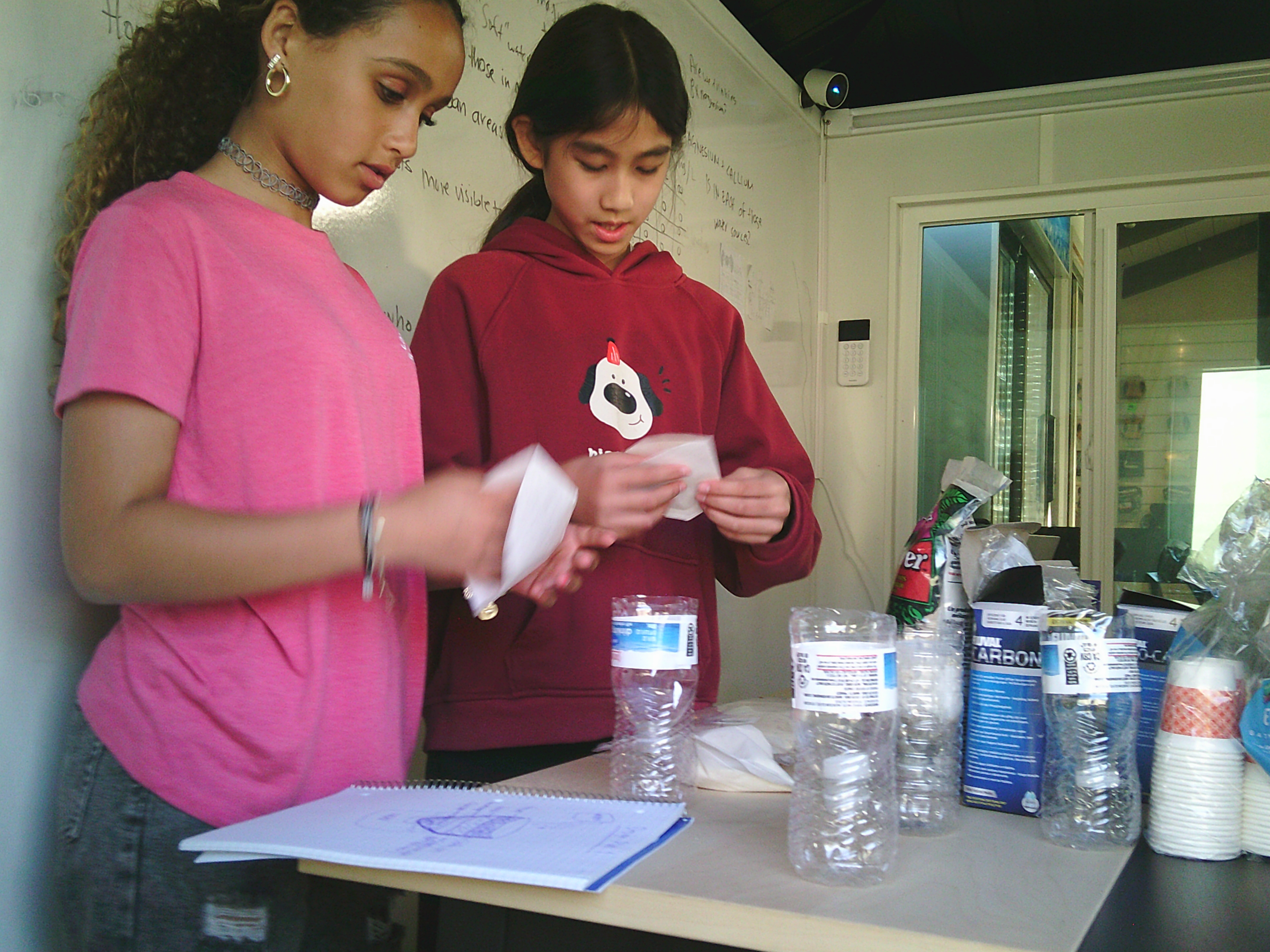
“We learned that San Diego’s tap water is safe to drink, and has healthy minerals like magnesium and calcium. Families do not trust the tap water because of its taste.”
Most of San Diego’s tap water is sourced from the Colorado River and is naturally abundant in calcium, which contributes to the chalky taste. They hypothesized that if they could create a water filter that reduces just a bit of calcium, it could make the tap water “softer” and tastier. They realized that their solution wouldn’t apply for all neighborhoods, since some have localized issues like older pipes or contaminated water sources.
They dug into the Biomimicry Institute’s Ask Nature research database, and were inspired by four biological models:
Mangrove: Just like the plants slow down water, they tried different layered systems to slow down the water flow enough for particles to be filtered.
Sandgrouse birds: They added porous charcoal to increase surface area and capture calcium, just like the desert birds soak their uniquely absorbent feathers to hold as much water as possible to carry to their young.
Aquaporins: Just like the tiny doorways in a cell membrane that let only water pass through, they used ion exchange resin, which allows water to pass while trapping some, but not all calcium.
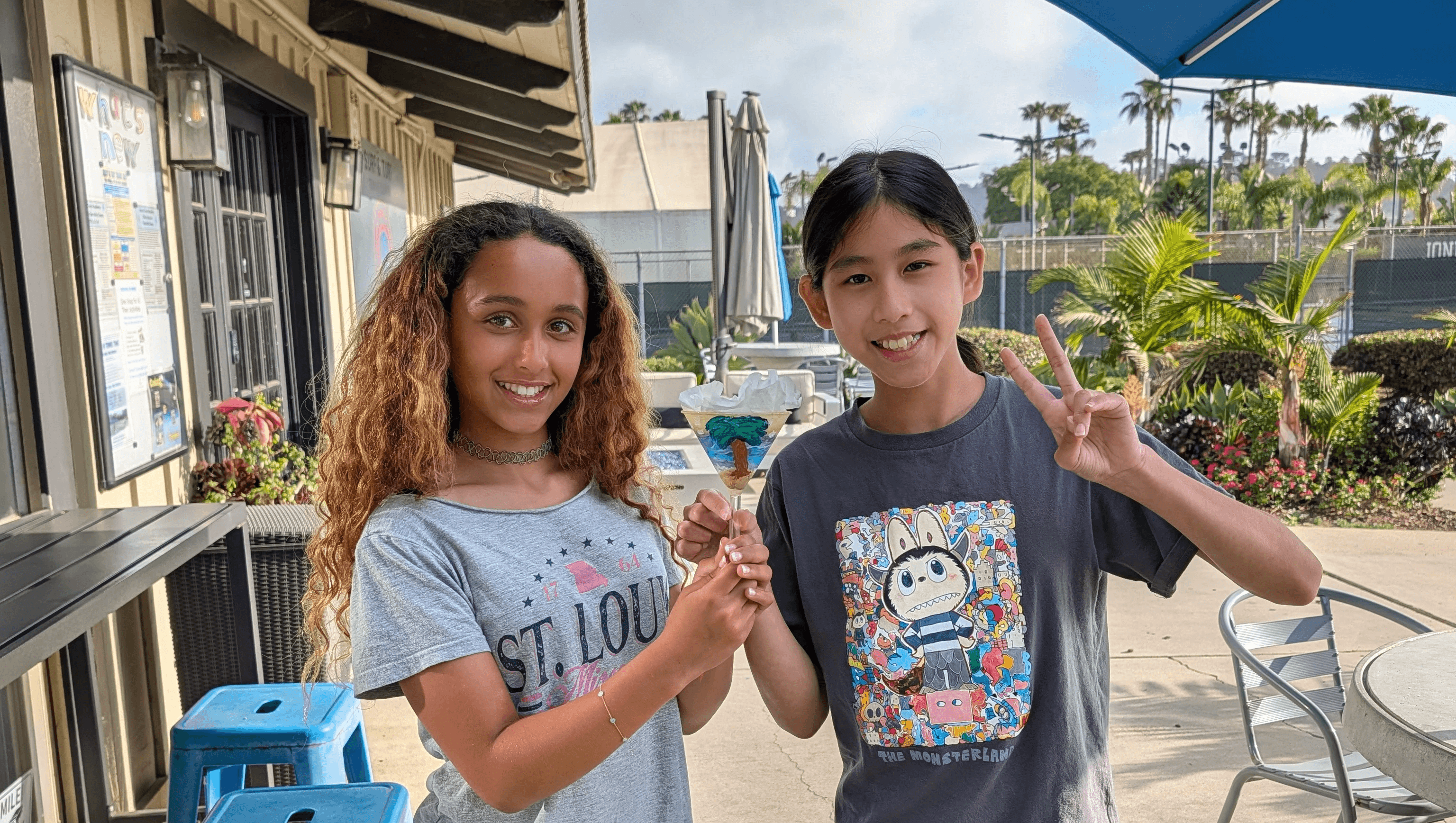
Orchids: The girls asked students at Ember Coding Lab to decorate a cup, then return later and choose from a variety of cups, including their own. Each kid immediately picked their own. They hypothesized that families would be more likely to use a filter if they decorate it and make it uniquely theirs, just like an orchid makes a unique scent so a particular bee chooses it over other orchids.
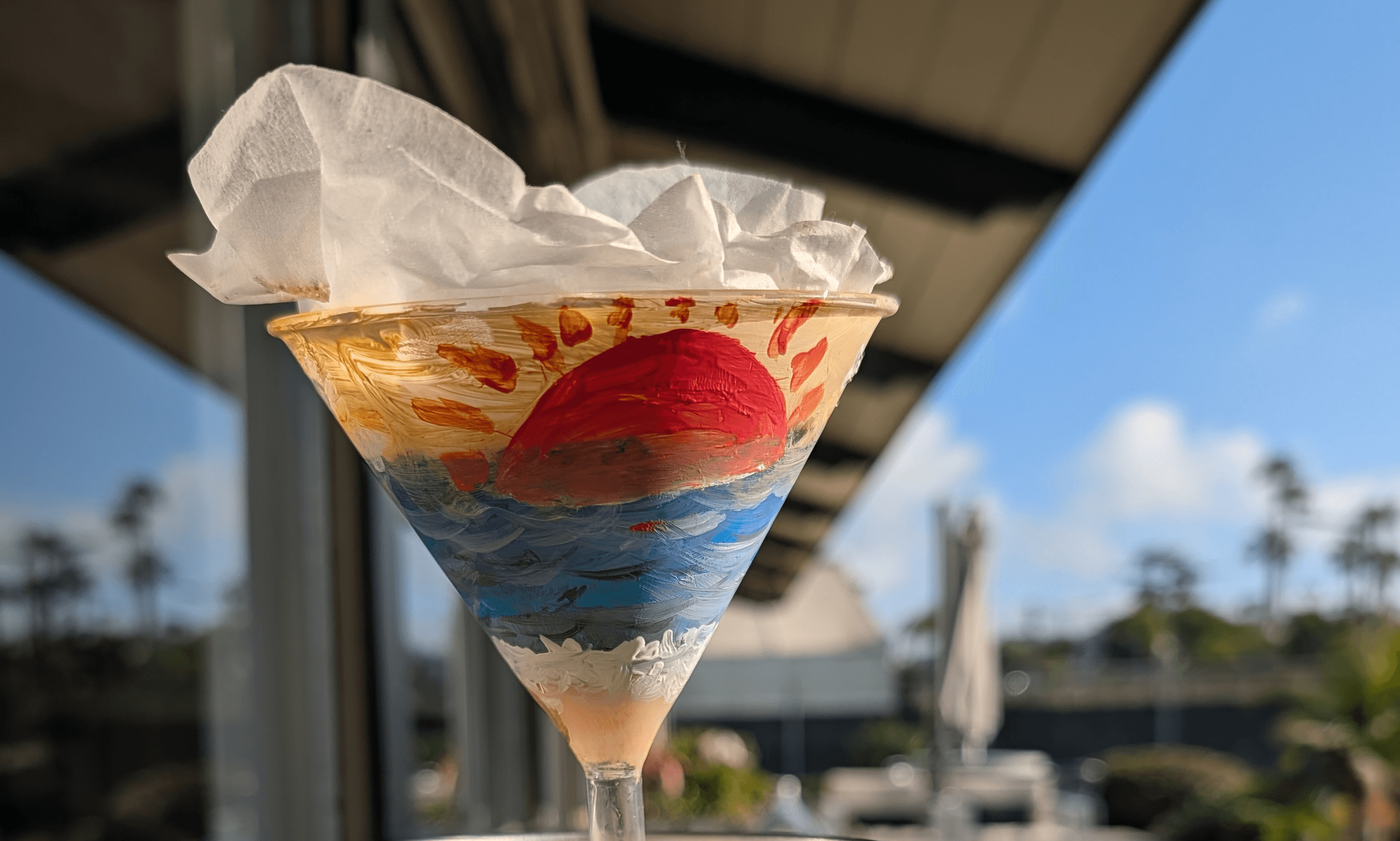
The final prototype reduces calcium by 84%, and is estimated at $5 to buy, and less than $2 to resupply monthly, which puts $200 to $400 back into San Diego families’ pockets.
The chemistry and economics suggest the filter works, but whether it makes San Diego tap water something families actually want to drink is the next evolution of their project.
One thing is for sure, the girls learned that the best solutions come from listening to what nature has already perfected.
Watch Ella and Esme pitch their nature-inspired solution for an international panel of judges. The girls placed 7th in the middle school division! #top10 🌿